
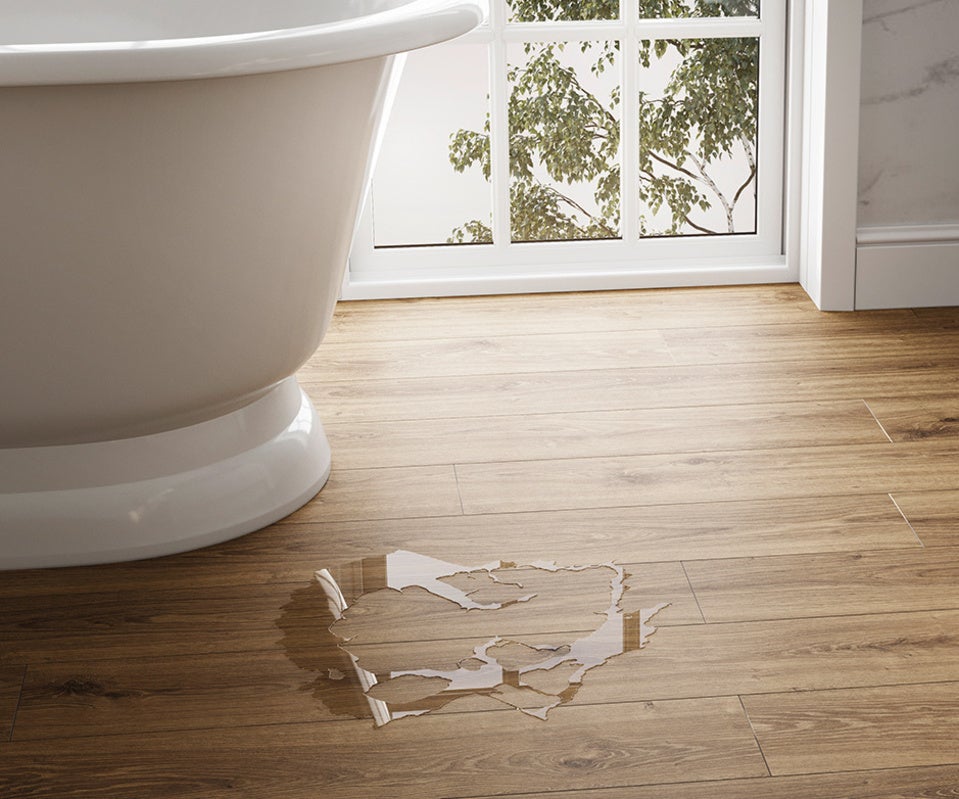
It’s a common homeowner nightmare: you come home from a long day only to discover a puddle by the dishwasher or a soft spot near the washing machine. Your stomach drops, and the questions start. Is this a quick fix, or are you looking at new floors?
Water-damaged floors are stressful, but the answer isn't the same for every home. The right call depends on your floor type, how long the water sat, and what's happening underneath. Let's walk through how to tell the difference.
What to Do Right After Water Damage
The first hours matter most. Acting quickly can help limit how far moisture spreads, and that can make the difference between a repair and a replacement.
- Stop the source. Shut off the water supply or fix the leak. If water is near outlets or appliances, turn off the power at the breaker before you step in.
- Remove standing water. Use towels, a mop, or a wet-dry vacuum.
- Lift what you can. Move rugs, furniture, and loose mats that trap moisture against the floor.
- Dry the area. Run fans and a dehumidifier, and open windows if the weather allows.
- Document the damage. Take photos before you make changes and contact your insurance provider to ask what your policy covers.
Tip: If the water comes from a sewage backup or outdoor flooding, skip the DIY approach. That water can carry contaminants, so call a restoration professional.
How Do You Know If Water-Damaged Floors Need Replacing?
Floors usually need replacing when moisture has reached the subfloor, when damage covers a large area, or when mold or a lasting musty smell is present. A small, quickly dried spill on a durable surface is a different story.
Watch for these warning signs:
- Warping or buckling: Planks lift, cup, or separate from the floor.
- Soft or spongy spots: The floor gives underfoot, which can point to a damp subfloor.
- Discoloration: Dark patches may signal moisture trapped below the surface.
- Persistent odor: A musty smell that lingers after drying can suggest hidden moisture or mold.
- Repeat problems: If the same spot gets wet again and again, the cause needs fixing before any new floor goes down.
When you're unsure, a moisture reading from a professional can help. A floor that looks fine may still be damp beneath.
Water-Damaged Tile Floors: Repair or Replace?
Water-damaged tile floors are often repairable because the tile itself handles moisture well. The weak points are the grout, the setting material, and the subfloor beneath.
Think of tile as a sturdy dinner plate sitting on a bed of mortar. The plate may be fine, but if the bed underneath gets soft, the plate can shift.
Repair may work when:
- Only a few tiles are loose or cracked.
- Grout is stained or crumbling, but tiles remain firmly bonded.
- The subfloor feels solid and dry.
Replacement may be better when:
- Many tiles sound hollow when tapped.
- Cracks keep spreading across the floor.
- The subfloor is swollen, soft, or moldy.
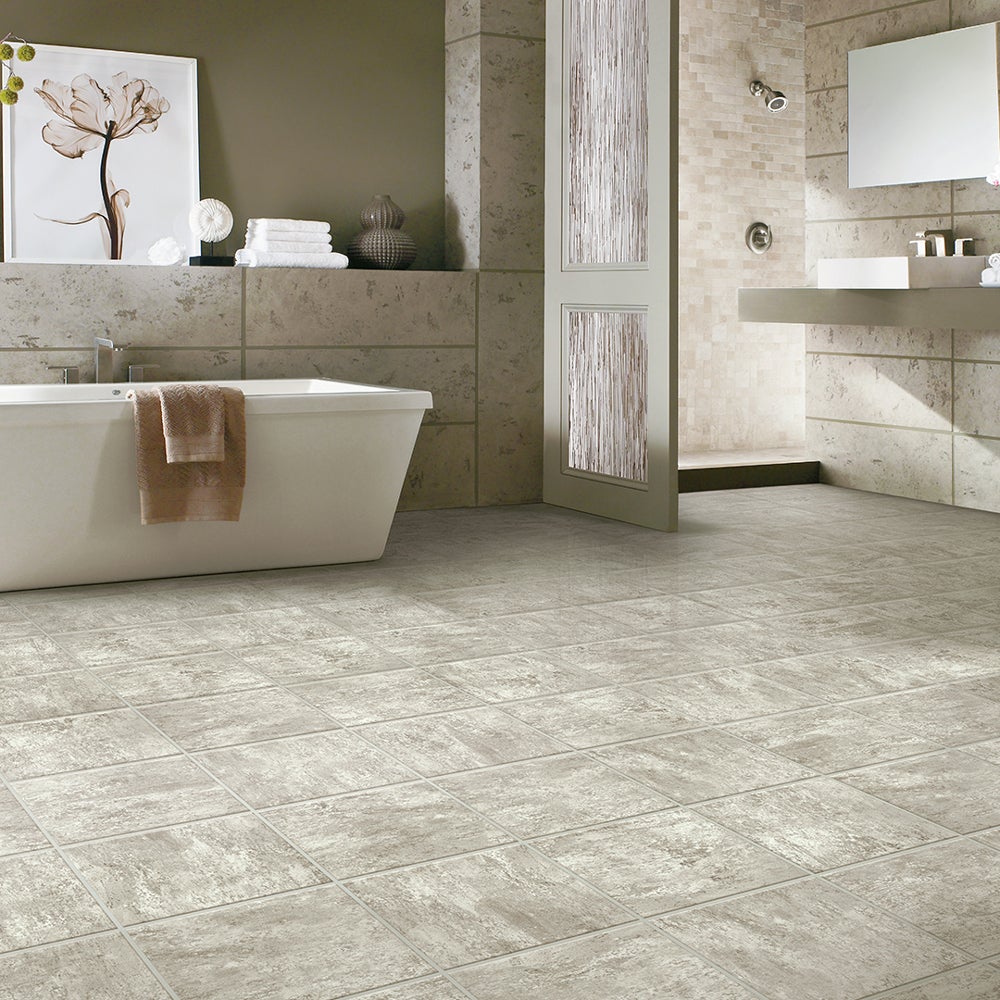
Replacing individual tiles is possible if you have matching spares, but older styles can be hard to match. If you're considering new tile, ask a flooring professional about options suited to wet areas. Stone-look and wood-look tile can give you the style you want with a durable surface.
Water-Damaged Vinyl Floors: Repair or Replace?
Water-damaged vinyl floors can often be repaired when the damage is limited to a few planks or a small section of sheet. The challenge is water seeping through seams and getting trapped underneath.
Luxury vinyl plank is made of layers, and the top layers handle surface spills well. Water that gets under the edges is another matter. It can loosen adhesive, cause curling at the seams, or leave moisture sitting on the subfloor.
Repair may work when:
- Only a few planks are affected, and you have spares.
- Edges are still flat and tightly connected.
- The subfloor is dry and clean.
Replacement may be better when:
- Planks are lifting or bubbling across a wide area.
- You see dark spots or smell mildew under the surface.
- Sheet vinyl has peeled or torn near the damage.
If you do replace it, vinyl is a popular choice for kitchens, laundry rooms, and basements. The selection of luxury vinyl plank Empire® carries includes DuraVista® premium luxury vinyl plank, which gives you the look of natural materials in a practical format. Ask a flooring professional which option fits the room you're updating.
Water-Damaged Laminate Floors: Repair or Replace?
Water-damaged laminate floors usually need replacement once water soaks in because the core is made of compressed fiberboard. When that core absorbs moisture, it can swell and doesn't typically return to its original shape.
You may spot swollen edges, raised seams, or planks that look like they're peeling at the corners. Think of a paper towel that dried after getting wet: it may look flat, but it's no longer the same.
Repair may work when:
- A single plank is damaged, and you have a matching spare.
- The floor dried quickly, and the edges were flat.
- The subfloor is dry.
Replacement may be better when:
- Several planks are swollen or buckled.
- Seams have opened up in more than one spot.
- Moisture has reached the subfloor.
If you're weighing new laminate, talk with a flooring professional about where it fits best. Areas with frequent moisture call for extra thought.
Choosing New Floors for Moisture-Prone Rooms
If replacement is the answer, use it as a chance to pick a floor that suits the space. Think about how the room is used, how often water shows up, and how much upkeep you want.
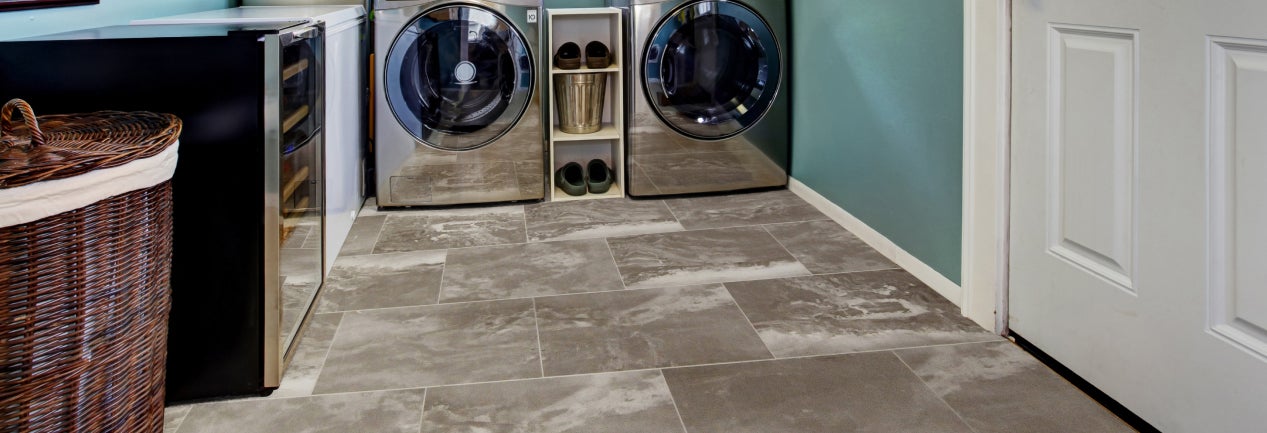
- Kitchens and laundry rooms: Tile and vinyl are popular because they handle everyday spills well.
- Bathrooms: Tile and vinyl are common picks, and grout lines and seams deserve attention.
- Basements: Moisture can come from below, so ask about subfloor prep and suitable options.
Fixing the cause matters as much as the floor you choose. A new floor installed over an ongoing leak can run into the same trouble. For everyday care, wipe up spills promptly and check with your manufacturer for approved cleaners.
Professional installation helps ensure the subfloor is prepped properly, and the Limited Installation Warranty⊛ adds peace of mind. You can learn more about warranties before you decide. The optional Empire® Service Plan◈ is separate from your product's manufacturer warranty, so ask about it if you want to explore added protection.
Frequently Asked Questions
Can water-damaged floors be saved?
Sometimes. Floors that dried quickly after a small, clean spill can often be saved, especially tile and vinyl. Floors with swelling, soft spots, or mold usually need replacement. A flooring professional can check the subfloor to help you decide.
How long does it take for water to damage a floor?
It depends on the material and the amount of water. Laminate can start swelling fairly quickly, while tile tolerates moisture better. Drying the area promptly can help limit damage, so don't wait.
Can you replace just one section of water-damaged flooring?
Often, yes. Tile, vinyl planks, and laminate planks can sometimes be swapped individually if you have matching spares. If moisture has spread under the surrounding floor, replacing a larger area may be the better choice.
How do you know if there is mold under a water-damaged floor?
Look for a musty smell, dark stains, or warping that lingers after drying. Mold can hide below the surface, so these signs matter. If you suspect it, contact a professional before pulling up the floor.
Does homeowners insurance cover water-damaged floors?
It may, depending on the cause of the water and your policy. Sudden leaks are often treated differently from long-term seepage or flooding. Take photos, keep receipts, and contact your insurance provider to ask what applies.
Repair or Replace? Here's the Bottom Line
Small, quickly dried damage on tile or vinyl can often be repaired. Widespread swelling, soft subfloors, or mold usually call for replacement, and laminate is the floor most likely to need it. Start by fixing the water source, then look closely at what's underneath.
Ready to see your options in person? Schedule a FREE in-home estimate with Empire Today®, and a flooring professional will bring samples right to your door. With more than 70 markets across the country, Empire makes it easy to get started. You can also schedule an appointment online and explore more tips on the Inspiration Center blog!