
You love the hardwood in your living room, but the bedrooms need new floors, or maybe the kitchen is getting a refresh. Now you're standing in a showroom (or your hallway) holding a sample and wondering if it looks like a happy match or an awkward cousin.
Let's get to the bottom of how to match new flooring to existing hardwood, and when it's smarter to skip the match and contrast on purpose.
How Do You Match New Flooring to Existing Hardwood?
To match new flooring to existing hardwood, start with the undertone (warm, cool, or neutral), then compare species, grain pattern, plank width, and sheen. Test samples next to your floor in natural daylight as well as evening light. If the match isn’t won't be close, choose a clear contrast in color and texture instead of a near-miss.
That near-miss is the real trap. Two woods that are almost the same often look like a mistake, while two that are clearly different can look like a decision.
Start With Undertone, Not Just Color
Undertone is the subtle hue beneath the surface's color, and it drives most of what you see. A floor can be "medium brown" and still lean red, golden, or gray.
Hold your sample on the existing floor and look for these cues:
- Warm undertones: Red, orange, or golden tones, common in cherry, red oak, and many honey finishes.
- Cool undertones: Gray, ash, or taupe tones, often seen in weathered or gray-washed finishes.
- Neutral undertones: Balanced, soft browns that tend to blend easily with either side.
If the undertones clash, the floors will fight each other even when the depth of color is similar.
Why Aged Hardwood Is Hard to Match
Wood naturally changes color over time as light and air interact with it, and many finishes also amber with age. A brand-new plank beside a 20-year-old floor can look noticeably different, even when it's the same species and stain.
Think of it like a brand-new white T-shirt next to a well-loved one. Both are white, but you can tell them apart. Sunlight, rugs, and furniture placement can also leave uneven patches, so compare your sample in a spot that represents the floor's overall tone.
Tip: Look in a closet or under a vent cover, where the wood is less exposed to sun, to see the original color.
Which Details Matter Most When Matching?
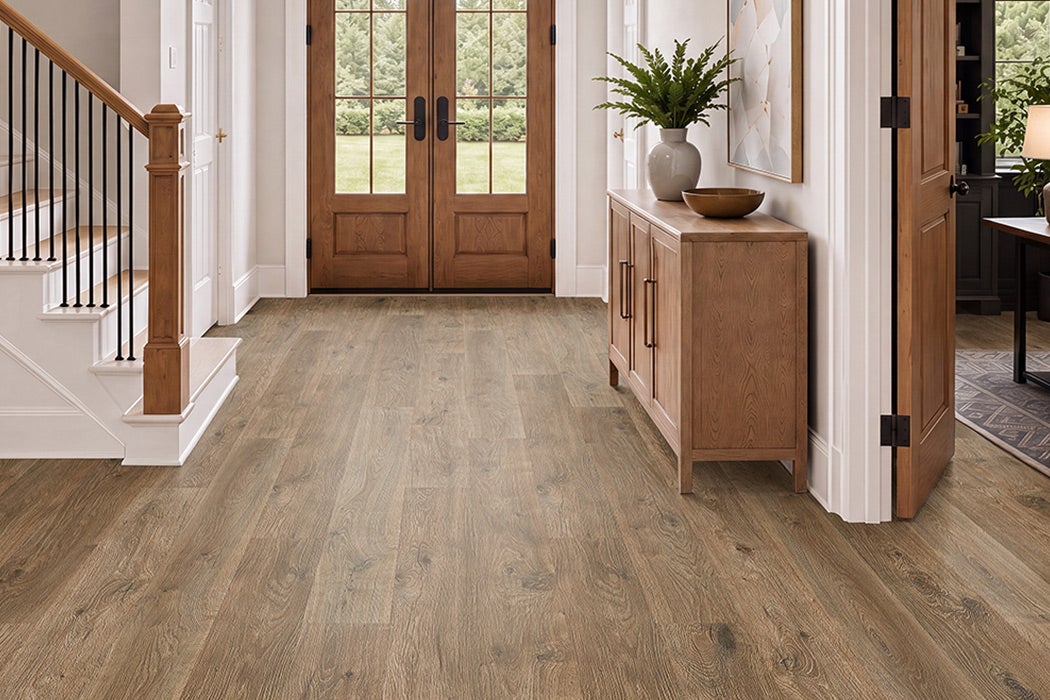
Color gets attention, but several other details decide whether floors look cohesive. Check each one against your current hardwood flooring:
- Species and grain: Oak shows bold, open grain, while maple is tighter and smoother. Mixing the two can read as a mismatch even in a similar color.
- Plank width: Wider planks feel more modern and open. Narrow strips feel more traditional.
- Sheen: Matte, satin, and gloss reflect light differently. A glossy new floor beside a matte one will stand out fast.
- Surface texture: Wire-brushed, hand-scraped, and smooth finishes each have a distinct feel underfoot.
- Edge style: Beveled edges create visible lines between planks, while square edges look more seamless.
If you can only match two things, prioritize undertone and sheen. They're the most noticeable from across the room.
Can You Match Hardwood with Other Flooring Types?
Yes. You can get the look of hardwood without installing hardwood everywhere, which helps when budget or moisture is a concern. Options include:
Engineered Hardwood
Engineered hardwood has a real wood top layer over a layered core. It can be a close match to solid hardwood in species and finish, and it's often a practical choice for rooms where solid wood is less suited. A flooring professional can help you compare options.
Wood-Look Tile
Wood-look tile brings the wood tone and plank shape to kitchens, bathrooms, and laundry rooms. It rarely matches grain exactly, so aim for a similar undertone and let the tile read as a companion rather than a twin.
Vinyl and Laminate
Wood-look vinyl and laminate offer plank styles in many tones and textures. They can work well when you want a coordinated look at a budget-friendly level. Seeing samples in your own light matters a lot here.
When Should You Contrast Instead of Match?
Contrast makes sense when a close match isn't realistic or when you want a room to have its own personality. If your samples land in the "almost but not quite" zone, go the other way.
Contrast tends to work well when:
- The floors are in separate spaces. A bedroom behind a closed door doesn't need to match the hallway.
- Your hardwood is heavily aged or sun faded. New floors will likely look different anyway.
- You want a deliberate design moment. A lighter floor in a sunroom or a darker one in a study can add character.
- You're adding a different material. Carpet in bedrooms or stone-look tile in a bath is clearly its own thing.
A good rule is to contrast by at least two or three shades, or change the material altogether, so it looks intentional.
How Do You Transition Between Matched or Contrasting Floors?
Where two floors meet, the transition does a lot of the work. Open layouts and sightlines are the biggest factors in deciding where one floor should end and another begin.
- Use natural breaks. Doorways, hallway ends, and changes in room function are ideal stopping points.
- Choose a transition strip that suits both floors. Metal, wood, and stone-look strips each have a different effect.
- Avoid stopping mid-room. A seam in the middle of an open space tends to look unplanned.
- Keep the direction of planks consistent when you can, which helps floors feel connected.
Tying Flooring Back to Your Home's Style
Your home's overall style can guide the decision. Traditional and colonial homes often look best with warm, classic tones that echo existing woods. Modern and Scandinavian spaces can handle lighter, cooler contrasts. Rustic or farmhouse homes often welcome texture and variation, so a little difference between floors feels natural.
Also think about trim, cabinets, and furniture. If your doors and baseboards already pick up your hardwood's tone, a new floor in a similar family can help the whole home feel pulled together.
How Do You Test Samples the Right Way?
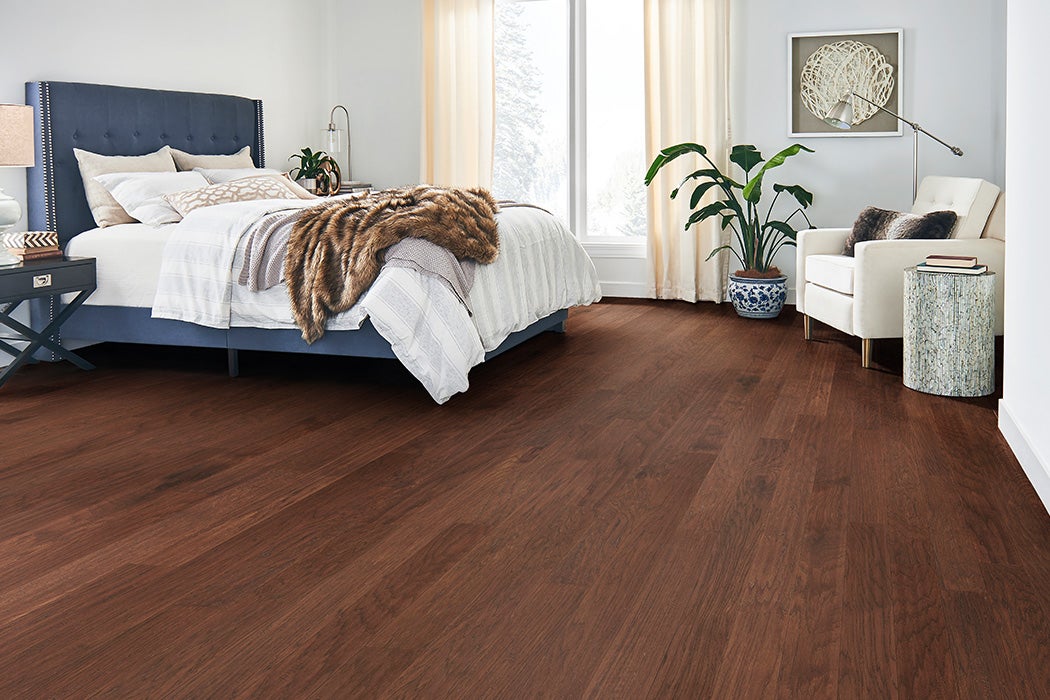
The best test is simple: bring samples home and live with them for a few days. Showroom lighting is very different from the light in your house.
- Place the sample directly on your existing floor.
- Check it in morning, afternoon, and evening light.
- View it from standing height, not just up close.
- Look at it next to your walls, trim, and furniture.
- Ask everyone in the household for a gut reaction.
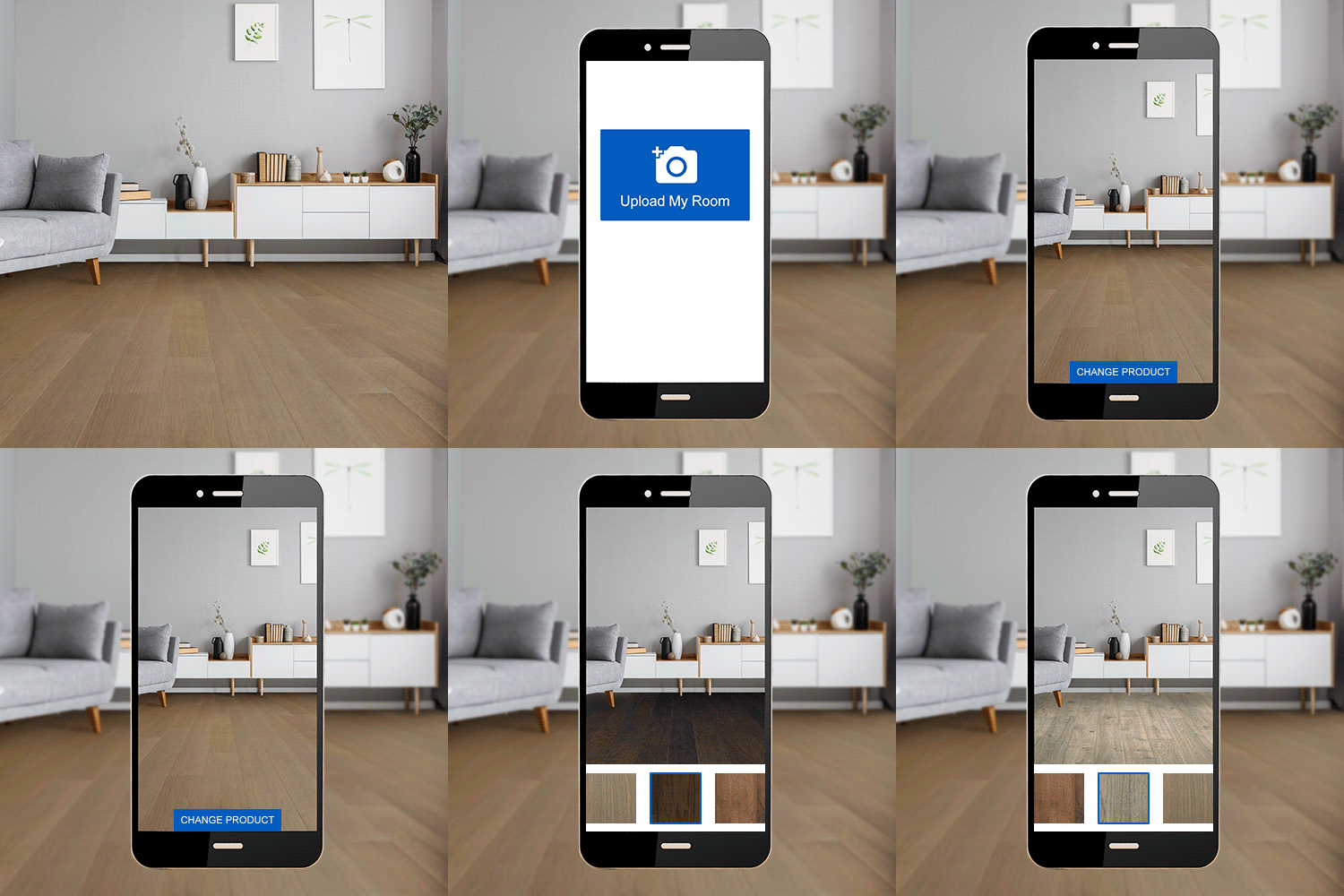
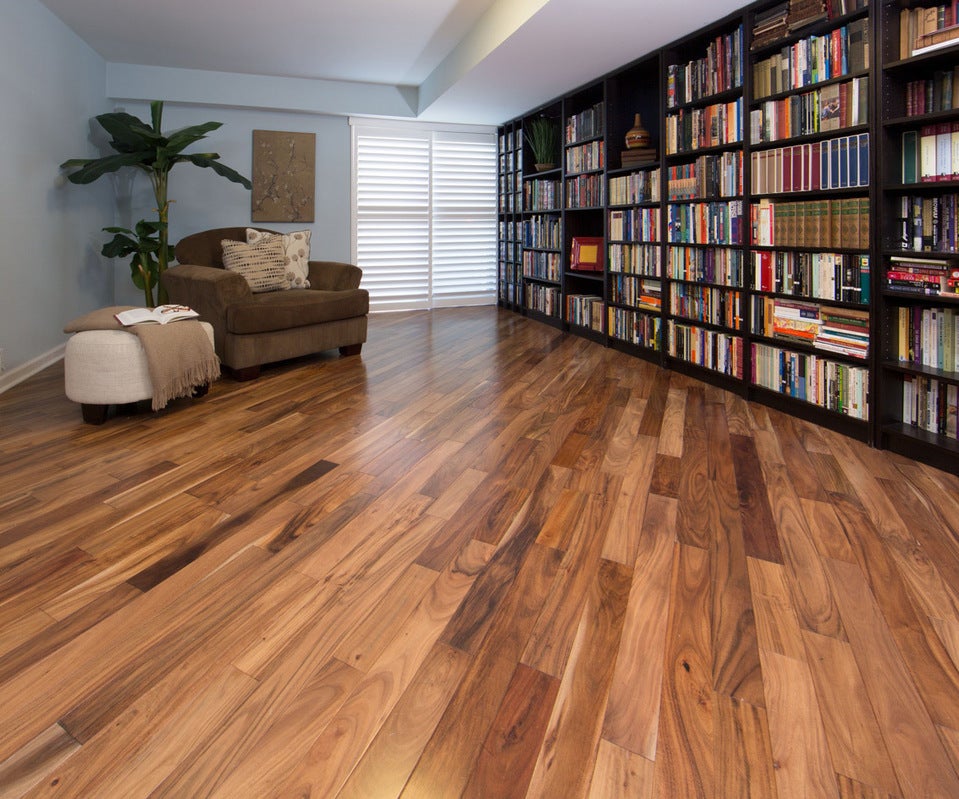
If you want to preview ideas first, the https://www.empiretoday.com/see-floors-in-your-room can help you picture options in your space. can help you picture options in your space.
Match Closely or Contrast Boldly
To match new flooring to existing hardwood, focus on undertone, sheen, species, and plank width, and test samples in your own light. If you can't get a close match, don't settle for a near-miss. A clear contrast looks like a design choice.
Ready to see your options in person? Schedule a FREE in-home estimate with Empire Today®, and a flooring professional will bring samples right to your door. With more than 70 markets across the country, Empire® makes it easy to get started. Want more ideas first? Explore the Inspiration Center.