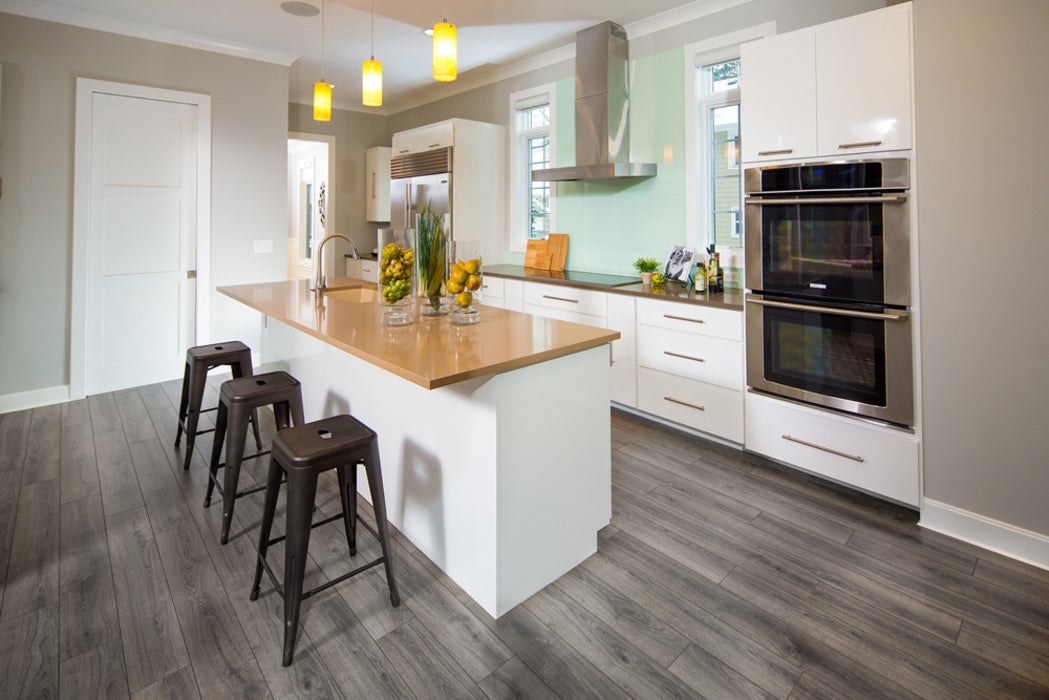
Your kitchen functions as your home’s hub for morning coffee rituals, family dinners, late-night snacking, and so much more. That means it sees constant traffic, so choosing the right flooring requires some careful thinking. You’ll need to balance durability and everyday practicality while still achieving an attractive style.
That’s why kitchen vinyl flooring could be the perfect option for your needs. It used to be dismissed as a budget-only option, but today’s vinyl has become one of the most versatile and resilient flooring choices on the market. Homeowners choose it for its affordability, its looks, and how well it withstands spills, scuffs, and wear that comes from daily life in a kitchen.
What makes vinyl such a standout in modern homes? First, let’s explain what kitchen vinyl flooring actually is and how far it’s come in recent years.
What is Vinyl Flooring?
Vinyl flooring is made from a synthetic material that’s engineered to mimic the look of natural surfaces like wood, stone, or tile. It can also offer certain performance benefits those materials can’t always guarantee. You’ll find it in several formats:
- Luxury Vinyl Tile (LVT): Replicates the appearance of ceramic or stone tiles.
- Luxury Vinyl Plank (LVP): Resembles hardwood planks, right down to the details in the wood grain.
- Sheet Vinyl: A continuous roll of material that covers larger areas with minimal seams. It’s typically the most budget-friendly option.
The biggest difference in the vinyl of today is how it’s engineered. Modern kitchen vinyl flooring features a rigid core of either WPC (wood plastic composite) or SPC (stone plastic composite) which increase stability and water resistance. Surface layers now feature realistic embossing that gives vinyl a texture that feels closer to the materials it’s meant to imitate.
7 Reasons Homeowners Love Kitchen Vinyl Flooring
1. Water Resistance
The kitchen faces more liquid hazards than any other room. Simmering pots bubbling over, leaky dishwashers; you name it, water can find its way onto your floor easier than you’d imagine. Unlike hardwood or some laminate products, which can warp or swell, kitchen vinyl flooring is fully water-resistant, some products are even waterproof. That makes it a great defense against the inevitable accidents of everyday cooking and cleaning.
2. Easy Cleanup
Kitchens are also mess magnets. Vinyl flooring simplifies the cleanup process. With a quick sweep to catch crumbs or a damp mop to secure spills, your floor will look brand new. No need for harsh scrubbing or specialized treatments. If you compare that to tile grout, which stains easily, or hardwood, which requires delicate maintenance, it’s easy to see why homeowners love vinyl. They want more time enjoying their meals and less time cleaning up afterward.
3. Durability
Kitchens are rarely treated gently. Pets scamper through, kids drop plates and utensils, and adults scoot chairs across them every day. Vinyl can hold up under this kind of wear and tear thanks to its protective layers that resist scratches, dents, and scuffs. Some products even come with warranties extending into the decades. Such resilience is even more appealing to homeowners who plan to entertain often since they’ll know their flooring will look great long after installation.
4. Looks Great on a Budget
Anytime you remodel your kitchen, cost will enter the equation. Vinyl might be the ideal sweet spot: it’s not as expensive as hardwood or tile but won’t compromise on appearance. The design options of today are so convincing that your guests might mistake it for the “real thing.” If you’re working within a set budget, kitchen vinyl flooring will let you reallocate your funds toward premium countertops, cabinetry, or appliances without sacrificing floor quality.
5. Versatility and Style
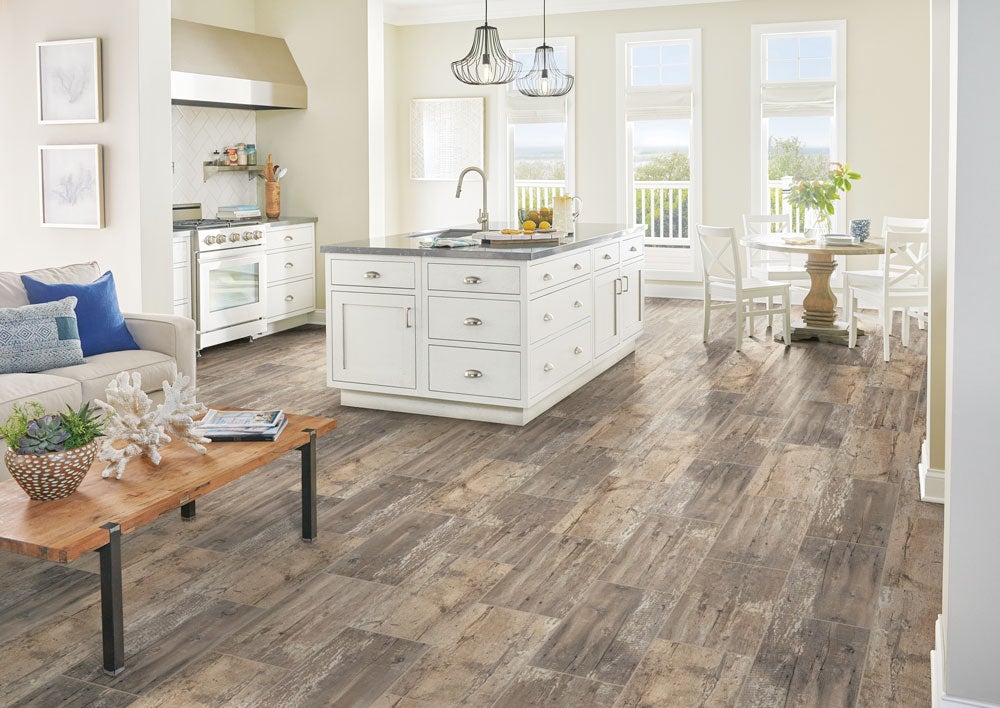
Once upon a time, vinyl was flat, plasticky, and uninspiring. Modern vinyl now offers near-limitless design potential. You can achieve rustic farmhouse aesthetics, sleek and polished stone looks, bold geometric patterns, or anything else you could imagine. Kitchen vinyl flooring can adapt seamlessly to practically any style, from warm and traditional to sharp and contemporary.
6. Comfortable and Quiet
Tile will always feel timeless, but it might get uncomfortable when you’re on your feet hour after hour preparing a big meal or cleaning up after one. Vinyl offers softer surfaces with enhanced give, which helps make meal prep and cleanup easier on your legs and back. Vinyl products also include padded underlayers that can help reduce noise. This is a major perk for open-concept homes where kitchen sounds may travel into living spaces.
7. Seamless Integration with Open Floor Plans
On that note, many kitchens don’t exist in isolation within the home but rather flow over into dining rooms and living areas. With vinyl’s wide array of styles, it’s easy to carry a consistent flooring choice throughout these connected spaces. It allows you to create a feeling of continuity that enhances the aesthetic you’re going for to create the illusion of larger, more cohesive interiors.
Vinyl vs. Other Kitchen Flooring Options
When the time comes for you to consider new kitchen flooring, vinyl will typically be measured against the three big contenders: tile, hardwood, and laminate. Each one has its own appeal, but the differences are clear when you examine the details.
Tile is praised for its water resistance and timeless appeal. It works great in wet spaces but can feel cold and unyielding underfoot. Long kitchen sessions may feel punishing, and those grout lines will need regular upkeep to prevent staining.
Hardwood is unmatched in the beauty and warmth categories, which makes it a dream for many homeowners. But in the kitchen, it’s a big gamble. Spills, moisture, and dropped pots and pans may leave lasting scars. Regular maintenance on hardwood is far more demanding than what vinyl requires.
Laminate is also budget-friendly and relatively easy to incorporate into your home, but it may be vulnerable to water damage. In kitchens, moisture is constant, putting certain laminate products at a distinct disadvantage.
By contrast, kitchen vinyl flooring blends all of these qualities without many of their drawbacks. It can be waterproof like tile while feeling softer underfoot, easier to clean and maintain than hardwood, and as affordable if not more so than laminate. When you consider the vast range of design options, it’ll become clear why vinyl keeps winning over so many homeowners.
Tips for Choosing Kitchen Vinyl Flooring
Not every vinyl product is created equal. Here are the main factors to keep in mind before you make your final decision:
- Wear Layer Thickness: The protective top coating on the product is the wear layer. Thicker layers offer better resistance to scratches and scuffs, which is particularly beneficial in kitchens that see constant activity.
- Finish and Texture: Some embossed finishes mimic the look of real wood or stone while adding traction to help reduce the chance of slipping in a busy kitchen. Smooth surfaces may look sleek, but they pose a danger when wet.
- Core Construction: Do you want standard vinyl, WPC, or SPC? SPC is significantly more rigid and dent resistant, while WPC creates a lot more valued comfort underfoot.
- Style Coordination: How do you want your kitchen vinyl flooring to complement your cabinets, countertops, and backsplash? More neutral tones will work better when you want flexibility, where bolder patterns can turn your flooring into the design’s focal point.
- Room Flow: In more open floor plans, think about carrying the vinyl all the way into adjacent spaces to achieve that seamless look.
Modern Flooring for Your Modern Kitchen
It’s the heart of the home, so make sure the flooring you choose sets the right stage for everything that’ll happen in your kitchen. Vinyl is no longer just a budget pick. It’s an all-in-one solution blending practicality and modern design. It’s tough against spills and scuffs, and comfortable underfoot after hours of cooking and entertaining. Plus, it’s stylish in a way that complements any home aesthetic.
If you want to upgrade to kitchen vinyl flooring, it’s time to explore all of your options. There are so many designs and performance features out there that you’re bound to find one that keeps your kitchen functional and beautiful for years to come. For more information on your flooring options, schedule a FREE in-home estimate from the team at Empire Today®!