_ArticleHeroV3.jpg?language=en)
Just as every room in your home exists for a different purpose, each of those rooms may be best served by a specific type of flooring. While your personal preferences will, of course, play a large part in the floors you choose, there will often be more concrete reasons to opt for one type of floor over another for each room. Your kitchen flooring needs will be different than the floor in a bedroom, for instance most other rooms. Perhaps more than any room in your home, the kitchen should focus on function as much as form, and that can make it difficult to decide on the best kitchen floors. If you’re in need of some kitchen flooring ideas, we’re here to help.
Tile
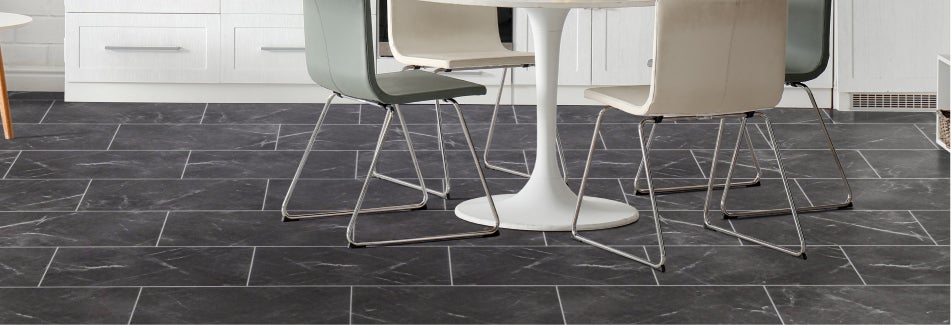
For many years, tile was the go-to choice when it came to kitchen flooring. Porcelain and ceramic tile both offer a durable surface that is naturally water-resistant and easy to clean. That makes tile an excellent flooring choice for the room where most spills happen. The modular nature of tile also offers myriad design possibilities, giving homeowners nearly limitless options for adding a unique style to their kitchen. One factor to be aware of when considering tile for your kitchen flooring is that the same properties that make it very strong also make it an incredibly hard material, and that hardness can make it an uncomfortable surface to stand on for long periods of time. While a cushioned mat at the sink can help, if you’re prone to hours of standing in the kitchen or have achy joints, you may want to explore some of the other kitchen flooring options.
Hardwood
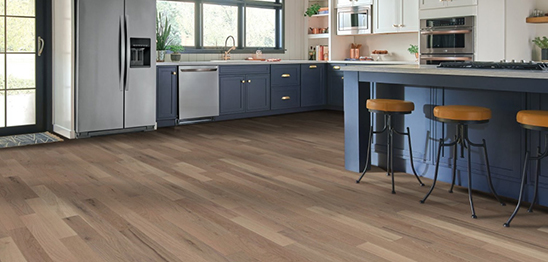
Many homeowners envision their dream kitchen as a rustic retreat that would be perfectly at place in a vintage farmhouse or mountain cabin, complete with distressed hardwood floors. Unfortunately, solid hardwood is not recommended as a kitchen flooring material since real wood and water don’t play nicely together. And, despite our best intentions, it’s usually impossible to keep liquids off the kitchen floor—whether because of the typical spills that will happen when cooking or carrying food, or from the regular mopping required to keep the floors looking their best.
One alternative to real wood floors in the kitchen is engineered hardwood, a product that fuses a thin top layer of genuine hardwood to a durable manmade core. This gives you the look and feel of real wood and the ability to refinish the floor at some point in the future, while also increasing the overall durability and adding a small measure of moisture resistance. However, if you do expect your kitchen floors to experience lots of spills or heavy mopping, you would be better off considering one of the following hardwood floor alternatives.
.jpg?language=en "Kitchen - Hardwood")
Laminate
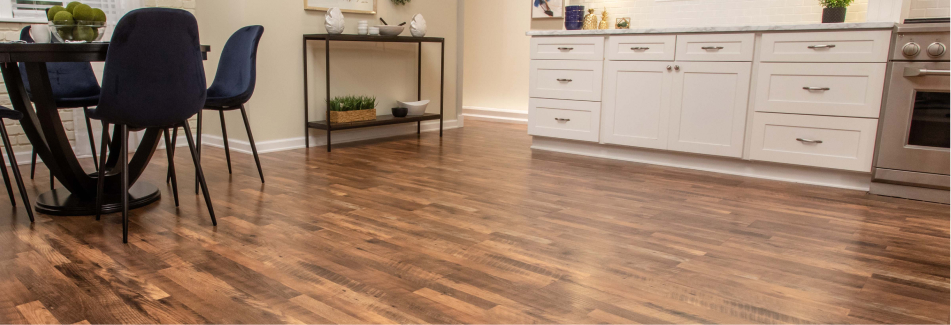
If you’re committed to the look of wood for your kitchen floors, laminate offers a more suitable alternative to solid hardwood. Wood laminate flooring is made with composite materials designed for durability and easy maintenance, lessening many of the worries that can come with a real wood floor. And with its photorealistic surface image and texture, wood laminate floors still offer the look and even the feel of real wood. All wood laminate products at Empire Today® are crafted with a scratch-resistant top layer, and many are water-resistant or fully waterproof. And with a wide variety of wood grains, colors, and plank widths, there’s likely a laminate product that fits into any of your kitchen flooring ideas.
.jpg?language=en "Kitchen - Laminate")
Vinyl Plank
For the ultimate in durability and versatility, while still achieving the hardwood aesthetic, there may be no better choice than luxury vinyl plank flooring. Crafted to look and feel just like real wood, including an incredibly realistic surface texture, vinyl plank flooring is available in a range of styles that will complement any of the most popular wood-based kitchen trends. But because no actual wood is used in the construction of these products, there’s little to no worry about issues with moisture. In fact, all luxury vinyl plank flooring products available at Empire® are fully waterproof. So, if a full cup of juice ends up on the floor, or you need to get extra aggressive with the mop water while scrubbing a dried sauce stain, you won’t have to worry about damaging your floors. Plus, you’ll still get to enjoy the warm, elegant aesthetics that wood floors are prized for.
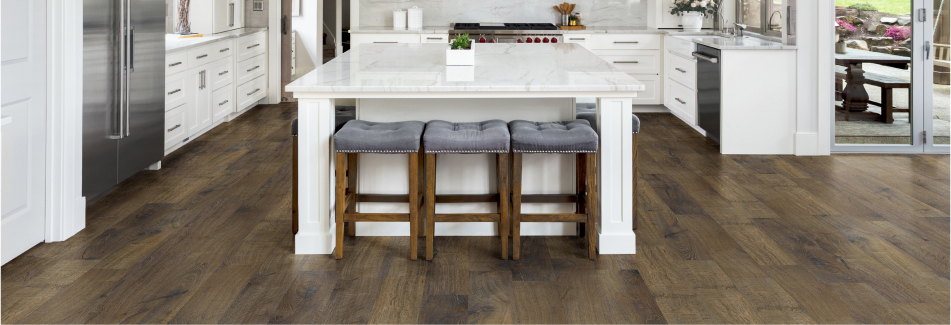.jpg?language=en "Kitchen - Vinyl")
What to consider when choosing kitchen flooring
As one of the most popular rooms in the home, form and function are both high priorities in the kitchen. You’ll want your kitchen to always look its best, since it’s likely to be one of the main rooms that your guests see and spend time in. And because your kitchen will typically experience more visitors than other rooms, you’ll also want your kitchen floors to be able to endure high levels of foot traffic. In a way, durability ends up being essential to aesthetics, because a floor that can resist damage, staining, and overall wear will look better for longer.
Kitchen Flooring Budget
The kitchen is one of the top renovation targets in any home. For homebuyers, it’s one of the most impactful ways to personalize the look and feel of their new home. For sellers, renovating a kitchen is commonly considered one of the best ways to add value to a home and make it more competitive on the market. And for those who are comfortable in their existing home and have no plans to relocate, updating the kitchen—even a project that only replaces the kitchen flooring—can breathe new life into a tired home.
The vast scope of renovation possibilities means that a kitchen flooring budget can vary greatly from project to project. Typically, ceramic or porcelain tile will be at the top of the scale, due to the cost of the materials and complexity of installation. And at the other end, sheet vinyl is usually the most affordable kitchen flooring option. Of course, there are budget-friendly tile options and high-end vinyl floor products, so the cost of a new kitchen floor can’t be easily summed up in a few broad statements. This is a topic that’s best discussed with your flooring consultant, who will be able to give you specific costs per product, as well as an upfront, all-inclusive price estimate▲ before you commit to anything.
Matching your kitchen floors to your lifestyle
You’ll often see recommendations to make sure your floors are durable enough for the activity levels in your home. So, what does “durability” really mean when it comes to your kitchen floors?
First is that you’ll typically want a hard-wearing surface. Your kitchen will likely see constant foot traffic in regular day-to-day life, with significant increases when you have guests over. That’s a lot of feet on your floors, and it’s likely you won’t always be able to control what types of shoes they’re wearing or how dirty they might be. Heavy foot traffic can quickly lead to worn-out floors if you choose a sub-par product. Instead of being forced to constantly worry about wear and tear on your kitchen flooring, invest in a product with a high wear rating and enhanced scratch resistance and take solace in knowing that your floors are better equipped to stand up to whatever life throws at them.
Another highly desirable trait for kitchen floors is some measure of water resistance or even full waterproofness. This feature is integral for two major reasons. First, the kitchen is one of the top rooms in the home for spills and splashes. Whether it’s a cup of juice that slips out of tiny hands or excess splashes from the kitchen sink, it is almost inevitable that liquids will be hitting your kitchen floor with some regularity. Additionally, because the kitchen tends to see so many spills and other messes, it’s one of the floors you’ll be cleaning the most often—and usually the most vigorously. Choosing water-resistant or waterproof kitchen floors means less worries about how much water you use when mopping up those messes.
That said, it’s important to not overlook the value of a comfortable kitchen floor! We previously mentioned that tile floors can be uncomfortable for people who spend lots of time in the kitchen. Tile is an extremely hard surface, and that hardness can take its toll on your body if you spend lots of time walking or standing in the kitchen—especially in a shoes-off home. Opting for a laminate or vinyl kitchen floor can lead to a significant upgrade in comfort. Both of those materials have the tiniest bit of give, which can really make a difference in your day-to-day life. Plus, when having laminate or vinyl flooring installed in the kitchen, you can often select a specific underlayment that will add a bit more cushion under the surface, further increasing comfort.
Kitchen Flooring Trends
As one of the most popular areas in the home, the kitchen is often the room most influenced by current interior design trends. And a major component of any home design trend is the flooring. Your kitchen floors lay the foundation for the overall look of the room and can influence everything from the color of the cabinets to the style of appliances you select.
Farmhouse Style
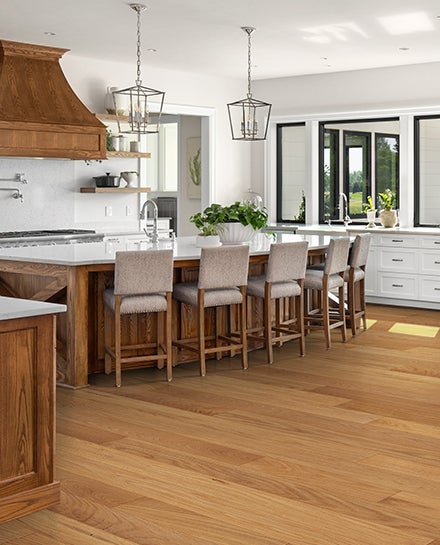
If you’ve spent any time researching kitchen design trends, particularly flooring choices for kitchens, you’ve undoubtedly come across the term “farmhouse” more than once. At its most basic, farmhouse kitchen style embraces warm, rustic design elements while pursuing a welcoming, unpretentious feel for your kitchen. Common farmhouse design elements include Shaker-style cabinets, a neutral or earth-toned color palette, and materials that suggest a “lived-in” feel. When it comes to farmhouse kitchen flooring, these design goals are usually achieved with wide plank wood flooring, often with a distressed or hand-scraped finish.
Maximalist Design
One of the top current interior design trends is the return to maximalism. Think bold colors and unique patterns integrated into all major aspects of a room’s style. This is often achieved with uniquely colored accent walls, funky wallpaper patterns, and creative use of throw pillows, wall hangings, and other curios. When designing a kitchen that embraces these ideas, popular tactics might include a brightly colored backsplash, or floors installed in a unique pattern. If you’ve ever felt nostalgic for the checkerboard kitchen floors of the 1950s, then this design trend might be exactly what you need.
Kitchen Flooring FAQs
What is the best floor to put in a kitchen?
The short answer is that there is no simple answer to this. Tile, wood laminate, and vinyl flooring all offer some advantages and some disadvantages compared to each other. What’s important is that you choose a kitchen floor with the features you need, like water resistance, enhanced scratch resistance, or a non-slip surface.
Can I have hardwood floors installed in my kitchen?
Solid hardwood flooring is not recommended for kitchens because it is likely to get wet often, and repeated exposure to moisture can damage real hardwood. Instead, consider wood-look flooring alternatives like luxury vinyl plank or wood laminate.
What is the easiest kitchen floor to maintain?
Kitchen floors will get dirtier than the floors in any other room, so ease of maintenance is often at the top of a homeowner’s wish list. Sheet vinyl is often considered the easiest flooring to maintain, thanks to its scratch-resistant wear layer, high level of water resistance, and minimal seams that can potentially trap crumbs and dust. However, porcelain and ceramic tile, vinyl plank, and vinyl tile all offer low-maintenance options.
What is the best color for kitchen floor tiles?
While your personal style preferences will be the biggest influence on what color kitchen floor you choose, it’s important to factor in practicality. A medium-tone tile in a color like grey or beige offers a good balance of not making your kitchen too dark, while still helping disguise the stains that might collect between cleanings. One often overlooked factor is grout color. Since grout is porous, it can stain easier than the surrounding tiles—and a lighter grout will show those stains more than a darker grout.
What are the disadvantages of tile flooring in the kitchen?
Tile is a great choice for your kitchen because it’s extremely resilient, inherently water resistant, and easy to maintain. However, it does have some downsides. As an extremely hard material, it can be uncomfortable to walk or stand on, especially if you’re barefoot or only wearing socks. It can also feel quite cold underfoot, which is something worth considering if you live in an area of the country with long winters.
From first developing your kitchen flooring ideas to finally seeing them come to life in your home, the process of picking the perfect floors can be a complicated one. But it doesn’t have to be! For more than sixty years, we have made it our goal to help our customers get beautiful new floors with as little stress as possible. It’s one of the reasons we’ve completed more than three million flooring installations since we started. If you’re ready to breathe new life into your kitchen, we’re here to help. Give us a call at 800-588-2300 or click any of the “Schedule In-Home Appointment” buttons on the site to get started.